


Jarred Dunn & Amanda Wolschleger
PADEREWSKI COMPETITION
Competition studio & Reviews 2025
Jarred Dunn & Amanda Wolschleger

Amanda Wolschleger
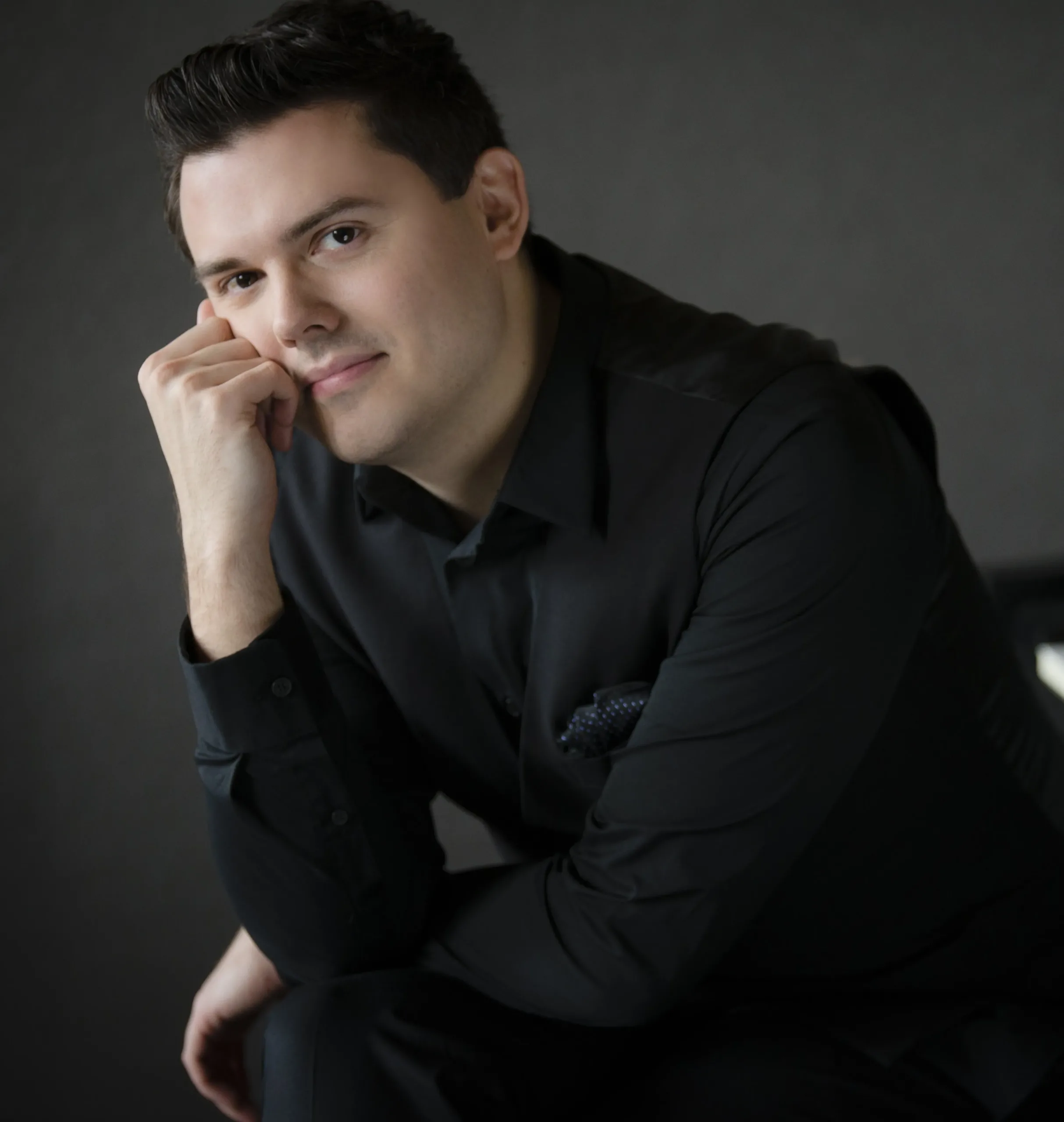
Reviewer of the 13th International Paderewski Piano Competition [...]
First Stage, Day 1
November 10, 2025
The 13th International Paderewski Piano Competition began this morning at 10 a.m. on the new campus of the Akademia Muzyczna im. Feliksa Nowowiejskiego.
The following are my reflections of the performances of the first thirteen participants:
1. OTA Saya, Japan, b. 12.11.1994
J. Haydn – Sonata No. 56 in D major, Hob. XVI: 42
- Andante con espressione
- Vivace assai
A. Scriabin – Sonata No. 7, Op. 64
F. Liszt – Paraphrase de concert sur Rigoletto, S. 434
The day began with Ms. Saya Ota of Japan, who started with the Haydn Sonata No. 56 in D Major, Hob. XVI: 42 where she demonstrated a full sound. Her playing was never rushed and she consistently gave the music time to breathe, taking time to lean on the dissonances at the end of phrases before coming to gently rest on the resolution. The Scriabin Sonata No. 7 Op. 64 featured contrasts between glittering high passages and powerful low sounds. In the Liszt’s Paraphrase de concert sur Rigoletto, S. 434, Ms. Ota produced playful passages in the upper register and smooth, delicate trills.
2. ARTESE Alessandro, Italy, b. 10.09.2001
J. Haydn – Sonata in E minor, Hob. XVI: 34
- Presto
- Adagio
- Vivace molto
F. Chopin – Étude in E minor, Op. 25 No. 5
A. Scriabin – Sonata No. 5, Op. 53
Next was Mr. Alessandro Artese of Italy, who also began with a Haydn sonata, this time in E minor, Hob XVI: 34, which featured contrasting articulations and a glass-like clarity of sound. Although at the beginning of his Etude in E minor Op. 25 No. 5 by Chopin, the melody was sometimes obscured, in the contrasting section, the melody carried clearly over the bass. He continued this demonstration with the Scriabin Sonata No. 5 Op. 52, which featured moments where the soprano floated above a full bass sound, like a leaf floating on water. Although Mr. Artese took his time with this piece, the ending unfortunately felt a little abrupt.
3. KIM Sunmin, Republic of Korea, b. 14.02.2002
D. Scarlatti – Sonata in C major, K. 420
D. Scarlatti – Sonata in C minor, K. 56
M. Ravel – Miroirs:
- No. 1 Noctuelles
- No. 3 Une barque sur l’océan
S. Prokofiev – Sonata No. 3 in A minor, Op. 28 “From Old Notebooks”
Mr. Sunmin Kim of the Republic of Korea began with two Scarlatti sonatas, K. 420 and K. 56, which featured nice color changes between phrases, tasteful phrase endings, and smooth hand crossings. Nos. 3 and 4 of Ravel’s Miroirs seemed to suit to him well, with his pedaling supporting a rippling bass line paired with clear soprano melodies. Changes in color as prominent intervallic material was transferred between the voices reflected the theme of the opus. He concluded with the Prokofiev Sonata No. 3 in A minor, Op. 28, “From Old Notebooks,” where he patiently allowed his final note to fade away in a very natural-sounding manner.
4. MIYOSHI Asaka, Japan, b. 02.06.1994
E. Tsuchida – Undulation
F. Chopin – Étude in A-flat major, Op. 10 No. 10
C. Debussy – Étude No. 6 Pour les huit doigts, L. 136
W. A. Mozart – Sonata No.4 in E-flat major, K. 282
- Adagio
- Menuetto I
- Menuetto II
- Allegro
F. Chopin – Ballade No. 4 in F minor, Op. 52
Ms. Asaki Miyosha of Japan started her performance with Tsuchida’s Undulations, a piece with which I was unfamiliar, featuring smooth runs representative of the title. The first movement of her Mozart Sonata No.4 in E-flat major, K. 282 presented a balanced relationship between melody and accompaniment and treated evasive and extended phrases with logical continuity, while contrasting articulations in the minuets imparted a playfulness to the dance.
5. ZHANG Lezi, China, b. 02.06.2005
W. A. Mozart – Sonata No. 2 in F major, K. 280
- Allegro assai
- Adagio
- Presto
A. Berg – Sonata in B minor, Op. 1
F. Chopin – Scherzo No. 3 in C-sharp minor, Op. 39
After an intermission, Ms. Lezi Zhang of China performed Mozart’s Sonata No. 2 in F major, K. 280, where the melody floated above a full-sounding bass without being obscured in the first movement, while the second demonstrated tasteful changes of color. In Chopin’s Scherzo No. 3 in C-sharp minor, Op. 39, her powerful sound occasionally obscured the melody, particularly during impressively fast passages. However, during moments of Berg’s Sonata in B minor, Op. 1, Ms. Zhang demonstrated the ability to with a surprisingly delicate sound.
6. THOMAS Gaspard, France, b. 15.10.1997
D. Scarlatti – Sonata in G major, K. 144
D. Scarlatti – Sonata in G major, K. 427
K. Szymanowski – Variations in B-flat minor, Op. 3
M. Ravel – Gaspard de la nuit, M. 55: Scarbo
Mr. Gaspard Thomas of France began with two Scarlatti sonatas, K. 144 and K. 427, in which he generously applied the pedal—an interesting decision that seemed much better suited to the Szymanowski and Ravel that followed. His Szymanowski Variations in B-flat minor, Op. 3 treated the dissonant counterpoint attentively and successfully captured the “quasi tempo di mazurka” of the third variation. In Ravel’s Gaspard de la nuit, M. 55, “Scarbo,” Mr. Thomas demonstrated a powerful sound, large dynamic range, and fluid hand crossings.
7. JEON Jongwon, Republic of Korea, b. 01.12.2000
J. Haydn – Sonata in D major, Hob. XVI: 42
- Andante con espressione
- Vivace assai
M. Ravel – Miroirs:
- No. 2 Oiseaux tristes
- No. 3 Une barque sur l’océan
- No. 4 Alborada del gracioso
In Haydn’s Sonata in D Major, Hob. XVI: 42, Mr. Jongwon Jeon of the Republic of Korea showed great control of contrasting articulations and quick dynamic changes. From Ravel’s Miroirs, he played Nos. 2-4. Of these, No. 2, “Oiseaux tristes,” was particularly noteworthy for its variety of tone color, while his No. 3, “Une barque sur l’océan,” depicted its title through a deep, rippling bass part which supported a melody of eye-watering brightness, like sunlight glinting off waves.
8. LEE Jaeyoon, Republic of Korea, b. 19.07.1997
D. Scarlatti – Sonata in G major, K. 454
F. Chopin – Andante spianato et Grande Polonaise brillante in E-flat
major, Op. 22
B. Bartók – Suite, Op. 14, Sz. 62
- Allegretto
- Scherzo
- Allegro molto
- Sostenuto
Ms. Jaeyoon Lee of the Republic of Korea began with Scarlatti’s K. 454 Sonata in G Major, where she paired a prominent bass line with clear articulations. In Chopin’s Op. 22 Andanto spianato et Grand Polonaise brillante in E-flat major, Ms. Lee was not afraid to occasionally take time, and the legato of her bass lines contrasted with the percussive articulations heard in the preceding Bartok Suite, Op. 14 Sz. 62.
9. IBARAKI Ayumu, Japan, b. 07.05.1997
J. Haydn – Sonata No. 53 in E minor, Hob. XVI: 34
- Presto
- Adagio
- Finale. Molto vivace
M. Ravel – Miroirs:
- No. 1 Noctuelles
- No. 3 Une barque sur l’océan
D. Shostakovich – Prelude and Fugue D-flat major, Op. 87 No. 15
In Haydn’s Sonata in E minor Hob. XVI: 34, Mr. Ayumu Ibaraki of Japan demonstrated his control of contrasting articulations, although occasionally the clear, full sound of his bass resulted in a melody which was partially obscured. This did not, however, remain a problem in the third movement, where the melody remained clear despite the busy bass accompaniment. Mr. Ibaraki also performed portions of Ravel’s Miroirs, of which No. 3, “Une barque sur l’océan,” was notable for its attention to inner voices and its variety of tone color, with the upper register at times resembling that of a glockenspiel. He concluded with a performance of Shostakovich’s Prelude and Fugue D-flat major, Op. 87, No. 15, that was impressive for its massive sound.
10. NAKAZAWA Mai, Japan, b. 06.08.2002
J. S. Bach – Fantasia and Fugue in A minor, BWV 904
F. Chopin – Scherzo No. 4 in E major, Op. 54
K. Szymanowski – Variations in B-flat minor, Op. 3
Ms. Mai Nakazawa of Japan began with J. S. Bach’s Fantasia and Fugue in A minor, BWV 904. Although there was perhaps too much pedal based on the sound from where I was seated in the hall, the entries of the fugal subject were audible and the individual voices clear. Her Szymanowski Variations in B-flat minor, Op. 3 often demonstrated admirable speed and energy. At the same time, although there were moments of vibrant color, these were at times impeded by choices in voicing and touch.
11. LIN Hao-Wei, Taiwan, b. 15.09.2004
L. van Beethoven – Sonata No. 30 in E major, Op. 109
- Vivace ma non troppo. Adagio espressivo
- Prestissimo
- Gesangvoll, mit innigster Empfindung. Andante molto cantabile ed espressivo
F. Chopin – Scherzo No. 4 in E major, Op. 54
Mr. Hao-Wei Lin of Taiwan showed his control of dynamic and expressive contrast in Beethoven’s Sonata No. 30 in E major, Op. 109, which was at times so vigorous he seemed to almost jump off the bench. His slow, lyrical passages were marked by a smooth legato and clarity of individual voices. Chopin’s Scherzo No. 4 in E major, Op. 54 featured tasteful voicing during passages of parallel motion and moments delicacy.
12. OLESZAK Michał, Poland, b. 05.02.2000
K. Szymanowski – Masques, Op. 34
- Schéhérazade
- Tantris le bouffon
- Sérénade de Don Juan
F. Liszt – Étude d’exécution transcendante, S. 139: No. 7 Eroica
In Liszt’s Étude d’exécution transcendante, S. 139, No. 7 “Eroica,” Mr. Michał Oleszak of Poland contrasted a powerful opening with delicate runs and moments of legato. Even more impressive, however, was his performance of Szymanowski’s Masques, Op. 34, which were filled with the kaleidoscopic color that characterizes much of the composer’s work. The first of these, “Schéhérazade,” demonstrated sensitivity of touch, an intimate understanding of its dissonant counterpoint, and use of a glittering high register. The second, “Tantris le bouffon,” featured tasteful voicing of inner voice melodies decorated by coloristic soprano lines, while the third, “Sérénade de Don Juan,” was characterized by moments of powerful sound unmarred by harshness and great independence of articulation and color among individual voices.
13. HAISMANN Julie, France, b. 04.07.2003
D. Scarlatti – Sonata in B-flat major, K. 545
I. J. Paderewski – Sonata in E-flat minor, Op. 21 (początek)
Ms. Julie Haismann of France began with Scarlatti’s Sonata in B-flat major, K. 545, which featured skilled and tasteful use of finger legato. This was followed by her performance of Paderewski’s Sonata in E-flat minor, Op. 21, bringing the first day of Stage I to a stunning close. The entire opus demonstrated an admirable sense of continuity and large-scale musical processes, highlighting motivic relationships both within and between the movements. Throughout the piece, Ms. Haismann presented engaging dialogue between voices and nuanced changes in tone color to great expressive effect. This was particularly poignant in the second movement, where her sound possessed the clarity of a freshwater spring and her voicing resulted in emotionally touching moments. At times her use of the upper register sounded with the resonance and delicacy of tiny bells, while at others her sound was huge, rich, and free from any harshness. In the final movement, Ms. Haismann’s balance, clarity of sound, and attention to individual voices allowed the composer’s use of counterpoint to truly shine.
Please join us on the 11th beginning at 10 a.m. for the second day of Stage I in person or online, and tune in to the Competition Studio, hosted daily by Jarred Dunn!
First Stage, Day 2
November 11, 2025
November 11th marked the second day of Stage I during which twelve participants performed. The following are my reflections:
14. KIM Jeongjin, Republic of Korea, b. 05.02.1998
J. Haydn – Sonata in E major, Hob. XVI: 31
- Moderato
- Allegretto
- Finale: Presto
S. Prokofiev – Sonata No. 7 in B-flat major, Op. 83
- Allegro inquieto – Andantino
- Andante caloroso
- Precipitato
Ms. Kim Jeongjin of the Republic of Korea started the second day of Stage I with Haydn’s Sonata in E major, Hob. XVI: 31, taking time in the ending of phrases during the first movement and presenting a lyrical bass line during the second movement. In Prokofiev’s Sonata No. 7 in B-flat major, Op. 83, she demonstrated a remarkably big sound, at times playing so vigorously it seemed the piano strings might snap. This contrasted with moments of harmonic color where soprano melodies floated like shards of ice over of the cold, dark water of her bass lines.
15. CHEN Tianrui, China, b. 07.08.2000
J. S. Bach – F. Busoni – Chaconne from Partita No. 2 in D minor, BWV 1004
F. Say – Troy Sonata, Op. 78: IV Sparta
A. Scriabin – Sonata No. 5, Op. 53
In the Bach-Busoni Chaconne from Partita No. 2 in D minor, BWV 1004, Mr. Tianrui Chen from China demonstrated a large sound not often heard in Bach. The Scriabin Sonata No. 5, Op. 53 continued this impression, pairing moments of dynamic intensity with softer sections where upper register melodies sounded like drops of freezing rain over soft bass lines. Say’s Troy Sonata, Op. 78: IV “Sparta” seemed best suited to Mr. Chen’s style, highlighting his percussive articulations and skillfully executed muting techniques. His attention to detail in regard to changes in tone color during these moments by adjusting his point of contact on the string was laudable.
17. ZHAO Zoé Ziji, China, b. 13.09.1999
J. P. Rameau – Suite in A minor, RCT 5: No. 7 Gavotte et six doubles
S. Rachmaninov – Étude-Tableaux in A minor, Op. 39 No. 6
F. Chopin – Études, Op. 25:
- No. 11 in A minor
- No. 6 in G-sharp minor
A. Scriabin – Fantasie in B minor, Op. 28
Ms. Zoé Ziji Zhao from China began with Rameau’s Suite in A minor, RCT 5: No. 7 “Gavotte et six doubles,” which she performed with rhythmic freedom, taking time at the end of phrases. Her Rachmaninov Étude-Tableaux in A minor, Op. 39 No. 6 provided evidence of her ability to produce a powerful sound and clear melodies. Ms. Zhao concluded with Scriabin’s Fantasie in B minor, Op. 28, where she contrasted dynamic intensity with moments marked by gentler melodies.
18. JEON Jaehyun, Republic of Korea, b. 08.05.1998
L. van Beethoven – Sonata No. 31 in A-flat major, Op. 110
- Moderato cantabile molto espressivo
- Allegro molto
- Adagio ma non troppo – Arioso dolente – Fuga – Allegro ma non troppo
D. Shostakovich – Prelude and Fugue in D minor, Op. 87 No. 24
In Beethoven’s Sonata No. 31 in A-flat major, Op. 110, Mr. Jaehyun Jeon from the Republic of Korea demonstrated a large dynamic palette and variety of articulations. Although at times the performance seemed to lose sense of its large-scale musical trajectory, the attention to contrasts in musical material was admirable. In the fugue, the entries of the subject were clear, a feature which carried over into the Shostakovich Prelude and Fugue in D minor, Op. 87 No. 24. Additionally, Mr. Jeon demonstrated impressive power which contrasted with quiet moments of sensitive voicing.
19. AOSHIMA Shuhei, Japan, b. 14.03.1998
F. Couperin – Troisième livre de pièces de clavecin:
- Ordre XVIII: Le turbulent
- Ordre XIX: La Muse-Plantine
O. Messiaen – Préludes:
- No. 1 La colombe
- No. 3 Le nombre léger
- No. 5 Les sons impalpables du rêve
- No. 7 Plainte calme
- No. 8 Un reflet dans le vent
I. Albéniz – Iberia, Book II:
- No. 6 Triana
Mr. Shuhei Aoshima of Japan began with two pieces from Couperin’s Troisième livre de pièces de clavecin, Ordre XVIII: “Le turbulent,” and Ordre XIX: “La Muse-Plantine,” which offered a variety of contrasting articulations. His Messaien Preludes (Nos. 1, 3, 5, 7, 8) demonstrated a rich range of tone colors and large dynamic palette, while the Albéniz Iberia, Book II No. 6 “Triana” contrasted a powerful sound with softer moments.
20. KIM Jiyoung, Republic of Korea, b. 18.06.1996
J. Haydn – Sonata in D major, Hob. XVI: 42
M. Ravel – Miroirs:
- No. 2 Oiseaux tristes
- No. 3 Une barque sur l’océan
- No. 4 Alborada del gracioso
Ms. Jiyoung Kim of the Republic of Korea began with Haydn’s Sonata in D major, Hob. XVI: 42, presenting contrasting articulations. Although she was careful not to allow the melody to be obscured, at times this resulted in moments where the sound of the bass was somewhat lost. Ravel’s Miroirs seemed better suited to her playing, highlighting her capacity for producing a variety of tone colors, and expressive moments particularly in Nos. 2 and 3, where her rippling base lines captured the ebb and flow of tides.
21. ZHU Harmony, Canada, b. 17.11.2005
J. Haydn – Sonata No. 56 in D major, Hob. XVI: 42
- Andante con espressione
- Vivace assai
F. Chopin – Fantaisie in F minor, Op. 49
E. Carter – Caténaires
In her Haydn Sonata No. 56 in D major, Hob. XVI: 42, Ms. Harmony Zhu from Canada made the tasteful decision to add ornamentation. The execution was not always successful and at times created a sense of insecurity, but the intent was commendable and made for an exciting listening experience; I, for one, sincerely appreciated the effort. Her Chopin Fantaisie in F minor, Op. 49 featured a singing tone and legato bass lines. Ms. Zhu concluded with Carter’s Caténaires, demonstrating great control over sudden and irregular accents and changes in articulation. The she navigated the rhythmic complexities of Carter’s music from memory made it all the more impressive.
22. ROH Hyunjin, Republic of Korea, b. 07.01.2001
C. Czerny – Variations on a theme by Rode, Op. 33
F. Liszt – Années de pèlerinage II: Sonetto 104 del Petrarca, S. 161 No. 5
I. Stravinsky – G. Agosti – Firebird Suite
- Dance infernale
- Berceuse
- Finale
Ms. Hyunjin Roh of the Republic of Korea began with Czerny’s Variations on a theme by Rode, Op. 33, which featured a lovely singing tone and a pearlescent shimmer in the upper register. This quality carried over into the Liszt Années de pèlerinage II: Sonetto 104 del Petrarca, S. 161 No. 5, where it contributed to many expressive moments, though at times the music could have benefited from more nuanced voicing and issues with pedaling detracted from an otherwise sensitive sound. The highlight of Ms. Roh’s performance was the Stravinsky-Agosti Firebird Suite with which she ended her program. Despite some of the voices occasionally becoming partially obscured during intense moments, she never allowed harshness to enter her sound. This resulted in a compelling performance, contrasting sections of impressive delicacy with powerful chords possessing the rich resonance of tolling church bells.
23. ONODERA Takuma, Japan, b. 15.04.2005
B. Bartók – Two Romanian Dances, Op. 8a, Sz. 43
J. Haydn – Sonata No. 56 in D major, Hob. XVI: 42
- Andante con espressione
- Vivace assai
M. Balakirev – Islamey: Oriental Fantasy, Op. 18
Mr. Takuma Onodera of Japan began with Bartok’s Two Romanian Dances, Op. 8a, Sz. 43, which featured a rich, full sound particularly in the bass, while avoiding harshness. The Balakirev Islamey: Oriental Fantasy, Op. 18 extended this demonstration, achieving even greater dynamic heights. At times, however, the music would have benefited from more nuanced voicing in order to enhance the effect of his tone color and greater attention to large-scale cohesion. Overall, the comfort with which he performed fast passages and sudden musical changes was impressive.
24. CANDOTTI Michelle, Italy, b. 18.05.1996
G. Enescu – Suite No. 2, Op. 10, III. Pavane
S. Rachmaninov – Étude-Tableaux in C-sharp minor, Op. 33 No. 9
F. Liszt – Années de pèlerinage II: Après une lecture de Dante: Fantasia quasi Sonata, S. 161 No. 7
In her Rachmaninov Étude-Tableaux in C-sharp minor, Op. 33 No. 9, Ms. Michelle Candotti of Italy produced a full, powerful sound that contrasted well with the delicate opening of the Enescu Suite No. 2, Op. 10, III. “Pavane” that followed it. Here her sound took on a pearly color, with soprano melodies that at times sounded like water droplets floating over a legato bass. Ms. Candotti concluded with Liszt’s Années de pèlerinage II: Après une lecture de Dante: Fantasia quasi Sonata, S. 161 No. 7, where moments of intensity resulted in overly vigorous pedaling that somewhat detracted from what was otherwise generally a very tasteful sound.
25. DU Zhuoqing, China, b. 31.01.2007
F. Chopin – Ballade No. 1 in G minor, Op. 23
F. Chopin – Ballade No. 3 in A-flat major, Op. 47
F. Liszt – Hungarian Rhapsody No. 12 in C-sharp minor, S. 244
Mr. Zhuoqing Du began with two Chopin ballades, the Op. 23 in G minor and the Op. 47 in A-flat Major, which utilized a smooth, rounded tone that avoided harshness during climaxes, a feature which carried over into his Liszt Hungarian Rhapsody No. 12 in C-sharp minor, S. 244. Here Mr. Du demonstrated contrasting articulations that contributed to the character of the piece, paired with tasteful shifts in tone color from one section to another.
26. KUKLIŃSKI Kacper, Poland, b. 28.10.2004
W. A. Mozart – Sonata No. 10 in C major, K. 330
- Allegro moderato
- Andante cantabile
- Allegretto
S. Rachmaninov – Étude-Tableaux in A minor, Op. 39 No. 6
M. Ravel – Miroirs: No. 4 Alborada del gracioso
The final participant of the day, Mr. Kacper Kukliński began with Mozart’s Sonata No. 10 in C major, K. 330. Although at times the music was missing the sense of a cohesive large-scale trajectory, the overall sound demonstrated a sensitivity of touch and contributed to a singing melody. Mr. Kukliński concluded with No. 4 of Ravel’s Miroirs, “Alborada del gracioso,” which featured a variety of tone colors that enhanced the harmonic color already present in the piece. The overall vibrancy of this performance was supported by the clarity of his individual voices and his skillful use of the sustain pedal, making the shift in sound quality produced by applications of the left pedal all the more effective.
Please join us on the 12th beginning at 10 a.m. for the third day of Stage I in person or online, and tune in to the Competition Studio, hosted daily by Jarred Dunn!
First Stage, Day 3
November 12, 2025
November 12th, the third day of Stage I, saw thirteen more participants performing. These are my reflections on the day’s events:
27. QUEVEDO Pincetti Tomas, Chile, b. 26.11.1996
J. Haydn – Sonata No. 56 in D major, Hob. XVI: 42
- Andante con espressione
- Vivace assai
S. Rachmaninov – Études-Tableaux Études-Tableaux, Op. 33
- No. 5 in E-flat minor
- No. 6 in E-flat major
- No. 7 in G minor
F. Chopin – Scherzo No. 3 in C-sharp minor, Op. 39
Mr. Tomas Quevedo Pincetti from Chile began the third day of Stage I with Haydn’s Sonata No. 56 in D major, Hob. XVI: 42, where his voicing often highlighted the contrapuntal motion and resolution of dissonances in the first movement, contributing to effective changes in color between phrases. The first two of his Rachmaninov Etudes-Tableaux Op. 33 (Nos. 5-6) demonstrated his capacity for an impressively powerful sound, while the soft beginning of No. 7 offered a nice contrast. Unfortunately, the weight of Mr. Quevedo Pincetti’s sound was out of place in the Chopin Scherzo No. 3, which requires a sensitive touch even during moments of intensity.
28. SHEMCHUK Ivan, Ukraine, b. 26.11.1994
D. Scarlatti – Sonata in E major, K. 162
D. Scarlatti – Sonata in D minor, K. 32
D. Scarlatti – Sonata in D minor, K. 10
F. Chopin – Ballade No. 4 in F minor, Op. 52
A. Scriabin – Sonata No. 4 in F-sharp major, Op. 30
- Andante
- Prestissimo volando
Mr. Ivan Shemchuk of Ukraine began with three Scarlatti sonatas, K 162 in E Major, K. 32 in D minor, and K. 10 in D minor. Of these, K. 32 in particular demonstrated great sensitivity to melodic shape and color supported with a light bass line that was never overpowering. While Chopin’s 4th Ballade continued this tasteful attention to voicing and color, the effect was overshadowed by the intensity of Mr. Shemchuk’s sound. The Scriabin Sonata No. 4 in F-sharp major, Op. 30 which ended his program featured clear, glass-like soprano melodies that contrasted with the warmer sound of his well-voiced inner lines.
29. GUO Yiming, China, b. 13.11.2001
M. Ravel – La valse, M. 72
C. Vine – Sonata No. 1
In Ravel’s La valse, M. 72, Mr. Yiming Guo demonstrated facility with quick changes in articulation and sudden musical contrasts. Moments of sensitive voicing added color and were juxtaposed with points of intensity. In the Vine Sonata No. 1, Mr. Guo proved his ability to produce a powerful sound—one which in this case may have exceeded the limits of the performance space. However, the lyrical quality of his tenor melodies and the variety of his tone colors served as compensation.
30. LI Tiantuo, China, b. 24.12.2003
F. Mompou – Paisajes: No. 1 La Fuente y la Campana
C. Debussy – Étude No. 5 Pour les octaves, L. 136
M. A. Hamelin – Étude No. 12 in A-flat minor “Prelude and Fugue”
J. S. Bach – F. Busoni – Chaconne from Partita No. 2 in D minor, BWV 1004
In both Mompou’s Paisajes: No. 1 “La Fuente y la Campana” and the Bach-Busoni Chaconne from Partita No. 2 in D minor, BWV 1004, Mr. Tiantuo Li of China highlighted contrapuntal motion through clarity of individual lines, though the effect was diminished in the later due to the volume of sound he produced. The Hamelin Étude No. 12 in A-flat minor “Prelude and Fugue” tended to lose clarity soon after the entries of the fugal subject, but it made up for this with expressive contrasts in tone color and articulation that created an engaging dialogue between the voices the rest of the time.
31. MARGARIT Nicolas, Australia/Spain, b. 09.06.1999
J. P. Rameau – Suite in A minor, RCT 5
- No. 1 Allemande
- No. 7 Gavotte et six doubles
J. Haydn – Sonata No. 44 in F major, Hob. XVI: 29 I. Moderato
F. Chopin – Impromptu No. 2 in F-sharp major, Op. 36
S. Prokofiev – Toccata in D minor, Op. 11
Mr. Nicolas Margarit of Australia/Spain began with Rameau’s Suite in A minor, RCT 5, which featured very tasteful voicing of inner lines that supported the music’s contrapuntal motion. The Haydn Sonata No. 44 in F major, Hob. XVI: 29 I. Moderato demonstrated attention to tone color and shaping of phrases, but the overall effect was somewhat diminished by overly enthusiastic pedaling. Fortunately, this did not remain the case during Chopin’s Impromptu No. 2 in F-sharp major, Op. 36, where Mr. Margarit’s voicing and singing tone resulted in a sparkling upper register. Although the Prokofiev Toccata in D minor, Op. 11 pushed the boundaries of good tone during moments of intensity, it too exhibited a consideration for voicing, color, and overall balance between the lines.
32. NISHIMOTO Yuya, Japan, b. 19.07.2002
L. van Beethoven – Sonata No. 23 in F minor, Op. 57
- Allegro assai
- Andante con moto
- Allegro ma non troppo – Presto
F. Liszt – Étude d’exécution transcendante, S. 139: No. 4 Mazeppa
Mr. Yuya Nishimoto of Japan started with Beethoven’s Sonata No. 23 in F minor, Op. 57 which, though at times possessing a somewhat heavy touch, featured vibrant contrasts of color and articulation that paired with his sensitive voicing to create an engaging performance. His Liszt étude No. 4 “Mazeppa” continued the demonstration of Mr. Nishimoto’s tasteful voicing, with an upper register that sparkled and inner voice melodies that sang.
33. LIN Pin-Hong, Taiwan, b. 30.07.2001
G. F. Händel – Suite No. 3 in D minor, HWV 428
C. Debussy – Étude No. 8 Pour les agréments, L. 136
I. Stravinsky – G. Agosti – Firebird Suite
- Danse infernale
- Berceuse
- Finale
In Händel’s Suite No. 3 in D minor, HWV 428, Mr. Pin-Hong Lin executed clean articulations with a singing tone. Although occasionally individual voices were temporarily obscured, the bass was generally soft but resonant, supporting delicate upper register decorations. Upon finishing, he moved immediately into Debussy’s Étude No. 8 Pour les agréments, in a manner that was surprisingly smooth, where his sense for color and voicing became apparent. Soprano melodies like water droplets were supported by rich, rippling bass accompaniments. His inner voice melodies sang out, and at times shimmering harmonic colors evoked images of moonlight dancing under water. Once again, Mr. Lin moved smoothly and directly into the Stravinsky-Agosti Firebird Suite, which contrasted richly resonant chords like pealing church bells with moments of striking delicacy. Although on occasion during moments of intensity Mr. Lin’s sound toed the line of good taste, his attention to tone color and voicing effectively depicted shifting orchestral colors on the piano, creating compelling dialogue between voices and at times evoking chills.
34. LEE Jeyu, Republic of Korea, b. 17.01.1998
D. Scarlatti – Sonata in D minor, K. 32
D. Scarlatti – Sonata in E major, K. 135
F. Chopin – Polonaise-Fantaisie in A-flat major, Op. 61
S. Prokofiev – Sonata No. 3 in A minor, Op. 28 “From Old Notebooks”
Mr. Jeyu Lee began the second half of the day with Scarlatti’s Sonata in D minor, K. 32 and Sonata in E major, K. 135, the first of which featured melodic colors that shifted across registers over a soft resonant bass, and tasteful ornaments. The second was marked by clean articulations and a clarity of individual lines which carried over into the Prokofiev Sonata No. 3 in A minor, Op. 28 “From Old Notebooks” where it was combined with moments of incredibly powerful sounds that contrasted with softer ones.
35. ISHIZU Wakaba, Japan, b. 28.01.1997
D. Scarlatti – Sonata in D minor, K. 1
S. Rachmaninov – Moments musicaux, Op. 16
- No. 2 in E-flat minor – Allegretto
- No. 3 in B minor – Andante cantabile
- No. 4 in E minor – Presto
H. Dutilleux – Sonata Op. 1, III. Choral et Variations
Ms. Ishizu Wakaba of Japan began with Scarlatti’s Sonata in D minor, K. 1, marked by a soft bass that did not overpower the melody, which was appropriately ornamented. Her numbers from Rachmaninov’s Moments musicaux, Op. 16 (Nos, 2-4) demonstrated a large, full sound. No. 2 in particular was noteworthy for its attention to dissonances and a clear bass line that conveyed harmonic motion. In the Dutilleux Sonata Op. 1, III. Choral et Variations, Ms. Wakaba extended her dynamic palette, achieving moments of intensity that were interspersed with softer moments making use of a twinkling upper register.
36. CECINO Elia, Italy, b. 06.06.2001
D. Shostakovich – Prelude and Fugue in B-flat major, Op. 87 No. 21
J. Haydn – Sonata in E minor, Hob. XVI: 34
- Presto
- Adagio
- Vivace molto
Ch. Gounod – F. Liszt – Waltz from the Opera Faust, S. 407
In the Shostakovich Prelude and Fugue in B-flat major, Op. 87 No. 21 Mr. Elia Cecino successfully executed quick changes in articulation, dynamics, and musical texture, treating each contrapuntal voice with a different tone color. His Haydn Sonata in E minor, Hob. XVI: 34 was marked by fast, smooth runs and an attention to voicing and changes of color when material was repeated. In his somewhat overwhelming Gounod-Liszt Waltz, Mr. Cecino also demonstrated a wide variety of tone colors that imbued the music with character.
37. CHENG Shengye, China, b. 03.04.2001
F. Chopin – Étude in C major, Op. 10 No. 1
J. Haydn – Sonata No. 30 in D major, Hob. XVI: 19
- Moderato
- Andante
- Finale. Allegro assai
F. Liszt – Grandes études de Paganini, S. 141: No. 3 La Campanella in G-sharp minor
In the Haydn Sonata No. 30 in D major, Hob. XVI: 19, Mr. Shengye Cheng demonstrated an attention to contrasting articulations and dynamics as well as a sparing and tasteful use of pedal. At times his upper register melodies were almost glass-like, and new phrases were accompanied by changes in tone color that added interest. In Liszt’s La Campanella Mr. Cheng at times could have offered a softer, more rounded tone, but presented color changes in repeated passes and tasteful voicings of inner lines.
38. MIKNIUS Simonas, Lithuania, b. 07.06.2003
L. van Beethoven – Sonata No.12 in A-flat major, Op. 26
- Andante con variazioni
- Scherzo. Allegro molto – Trio
- Marcia funebre sulla morte d’un eroe. Maestoso andante
- Allegro
F. Liszt – Hungarian Rhapsody, S. 244: No. 9 in E-flat major “Pesther Carneval”
Mr. Simonas Miknius of Lithuania began with the Beethoven Sonata No.12 in A-flat major, Op. 26, which, on a large scale, featured lyrical singing lines contrasting with moments of heavy emotional intensity. On a smaller scale, details of articulation and voicing contributed to changes in color, particularly in the melody. The Liszt Hungarian Rhapsody, No. 9 “Pesther Carneval” also demonstrated moments of effective voicing and sound color, while extending the expressive range of his program. There were moments when Mr. Miknius played with such vigor that he kicked the pedal.
39. CHIANG Pei-Tsun, Taiwan, b. 18.02.1996
L. van Beethoven – Sonata No. 30 in E major, Op. 109
- Vivace ma non troppo. Adagio espressivo
- Prestissimo
- Gesangvoll, mit innigster Empfindung. Andante molto cantabile ed espressivo
M. Ravel – Miroirs: No. 4 Alborada del gracioso
In Beethoven’s Sonata No. 30 in E major, Op. 109, Ms. Pei-Tsun Chiang of Taiwan played with a singing tone and rich bass, although at times the upper register took on a brittle quality. The third movement especially offered effective voicings of contrapuntal motion and clarity of individual lines marked by differences in tone color. Ms. Chiang the the third day of Stage I to an end with No. 4 of Ravel’s Miroirs, “Alborada del gracioso.” At times the piece seemed to lose track of large scale continuity, but contrasts between sections added interest, and delicate flourishes in the upper register offered a pleasant contrast to moments of dynamic intensity.
Please join us tomorrow, November 13th at 10 a.m., when the five remaining participants will perform, followed by an announcement of the Stage I results later in the day. And as always: tune in to the Competition Studio, hosted by Jarred Dunn!
First Stage, Day 4
November 13, 2025
Today the final five participants of Stage I performed. Here are my thoughts on the morning’s events:
40. SIKAŁA Mikołaj, Poland, b. 09.08.1993
C. Debussy – Preludes, Book II:
- No. 5 Bruyères
- No. 6 Général Lavine – eccentric
- No. 8 Ondine
- No. 12 Feux d’artifice
A. Ginastera – Sonata No. 1, Op. 22
- Allegro marcato
- Presto misterioso
- Adagio molto appassionato
- Ruvido ed ostinato
Mr. Mikołaj Sikała of Poland started the fourth and final of Stage I with four Debussy preludes, which he imbued with a variety of tone colors, contrasting crystalline soprano melodies with bass lines that at times had the resonance of a large concert bass drum. In No. 8 “Ondine,” there were moments when the soprano possessed the silvery color of moonlight, and in No. 12 “Feux d’artifice” inner voices chimed through the texture. Ginastera’s Op. 22 Sonata continued this demonstration of color while Mr. Sikała extend his intensity of expression to new heights. During moments of intensity, he played so vigorously that occasionally big chords were accompanied by the stomping of his left foot.
41. BAEK Jinjoo, Republic of Korea, b. 05.03.1997
F. Liszt – Sonata in B minor, S. 178
Ms. Jinjoo Baek of the Republic of Korea offered an engaging performance of Liszt’s Sonata in B minor. Although at times new sections seemed to lose their connection to the piece as a whole, small-scale transitions between contrasting material were smooth. Throughout her performance, Ms. Baek demonstrated skillful control of rapid and nuanced changes in articulations, which contributed to the energy of the music. Occasionally the presence of her fingers was overly audible in the sound, but apart from that she played with a smooth, round sound that imbued powerful chords with richness and delicate soprano melodies with a silvery tone. In lyrical moments, she voiced in manner that added color to her sound, paying particular attention to tenor melodies.
42. NAMIKAWA Tsuzumi, Japan, b. 17.10.1997
J. S. Bach – Fantasia in C minor, BWV 906
J. Brahms – Intermezzo No. 2 in B-flat minor, Op. 117
G. Bacewicz – Sonata No. 2
In the Brahms intermezzo of Op. 117, Ms. Tsuzumi Namikawa of Japan presented individually audible lines and moments of melodic shaping that reinforced harmonic progressions. Although the Bacewicz sonata with which she concluded her program sometimes seemed to meander—a statement that applies to her earlier pieces as well—it featured a variety of colors and nuanced changes in articulation. In particular, Ms. Namikawa demonstrated tasteful voicings that often enhanced the music.
43. HAN Yuliang, China, b. 06.11.2007
R. Schumann – Fantasiestücke, Op. 12
- No. 1 Des Abends
- No. 2 Aufschwung
- No. 3 Warum?
- No. 7 Traumes Wirren
F. Liszt – Années de pèlerinage II: Après une lecture de Dante: Fantasia quasi Sonata, S. 161 No. 7
Mr. Yuliang Han of China began with four numbers from Robert Schumann’s Fantasiestücke (Nos. 1, 2, 3, and 7), where he contrasted powerful sounds perhaps suited to a larger hall with smooth arpeggiations and glassy soprano melodies. In the “Fantasia quasi Sonata” of Liszt’s S. 171, Mr. Han demonstrated smooth descending runs and fluid hand crossings, executing sudden changes in articulation and color that contributed to the character of the piece.
16. KAPINKOVSKA Teodora, Macedonia, Ur. 31.12.1999
B. Bartók – Out of Doors, Sz. 81
- With Drums and Pipes. Pesante
- Barcarolla. Andante
- Musettes. Moderato
S. Rachmaninov – Sonata No. 2 in B-flat minor, Op. 36
- Allegro agitato
- Non allegro – Lento
- L’istesso tempo – Allegro molto
In Bartók’s Out of Doors, Ms. Teodora Kapinkovska of Macedonia took the title of the first movement to heart, at times transforming the lowest register of the instrument into a massive drum through dynamics and articulation. The Rachmaninov Sonata No. 2 continued this demonstration of her capacity for powerful sounds during intense musical passages. Ms. Kapinkovska juxtaposed these moments of overwhelming sound with delicate passages where the soprano floated like moonlight over inner voice melodies.
As we reach the end of Stage I, I want to thank all the participants for the time and effort they put into preparing these performances. To those who are leaving us now: best of luck in your future endeavors. To those remaining: congratulations—I look forward to hearing you again soon.
And to everyone else: please join us tomorrow at 10 a.m. for the beginning of Stage II, and tune in to today’s Competition Studio with Jarred Dunn for an interview with jury member Olga Kern!
Second Stage, Day 1
November 14, 2025
Following yesterday’s announcement of the result of Stage I, the second stage of the competition commenced on this morning, on November 14th, with the first eight participants performing. The following are my thoughts on the day’s events:
3. KIM Sunmin, Republic of Korea, b. 14.02.2002
I. J. Paderewski – Album de Mai, Op. 10:
- No. 2 Chant d’amour
- No. 5 Caprice valse
J. Haydn – Sonata in C major, Hob. XVI: 48
S. Rachmaninov – Sonata No. 2 in B-flat minor, Op. 36
- Allegro agitato
- Non allegro – Lento
- L’istesso tempo – Allegro molto
After graciously handling a false start not of his own making, Mr. Sunmin Kim of the Republic of Korea started Stage II with Haydn’s Sonata in C Major which was notable for the clarity of individual lines which supported harmonic progressions. Although at times, the weight of his touch felt out of place in this stylistic context, Mr. Kim’s bass lines supported the melody rather than overpowering it, periodically taking on a soft, rounded sound quality. Of his two numbers from Paderewski’s Album de mai, the “Chant d’amor” featured engaging dialogue between the tenor and soprano lines, while changes in articulation supported the dance feel of the “Caprice valse.” In Rachmaninov’s Sonata No. 2, Mr. Kim demonstrated a capacity for broad, powerful sounds capable of filling a much larger hall than this. Although occasionally the music seemed to lack direction, there were softer moments of nuanced voicing of inner lines, which were decorated by a soprano that took on a bright silvery tone quality.
5. ZHANG Lezi, China, b. 02.06.2005
I. J. Paderewski – Humoresques de Concert, Op. 14: No. 4 Burlesque
I. J. Paderewski – Miscellanea, Op. 16: No. 2 Melody
L. van Beethoven – Sonata No. 26 in E-flat major, Op. 81a
- Das Lebewohl. Adagio – Allegro
- Abwesenheit. Andante espressivo
- Das Wiedersehen. Vivacissimamente (Im lebhaftesten Zeitmaße)
M. Ravel – Miroirs:
- No. 3 Une barque sur l’océan
- No. 4 Alborada del gracioso
- No. 5 La Vallée des Cloches
Ms. Lezi Zhang of China was next, beginning with Paderewski’s Op. 14 “Burlesque” where fast runs and a bright tone quality captured the energy of a dance. Although at times the Op. 16 “Melody” felt constrained by the weight of her touch, her bass did not overpower the soprano line, facilitating lyrical moments. In her Beethoven sonata, Ms. Zhang presented clear lines that highlighted harmonic colors. Occasionally shifts in musical textures were accompanied by a feeling of separation between sections, but in general sudden changes in dynamics and articulations were smooth. When playing with a soft touch, her treatment of tenor melodies resulted in a particularly expressive effect. During Ravel’s Miroirs, Ms. Zhang demonstrated some of her most coloristic playing. Although there were times when her sound would have benefited from a more sensitive touch, in “Une barque sur l’océan,” her soprano took on a glittering quality, softening to a silvery color during moments where it decorated inner voice melodies, while in “La Vallée des Cloches” she effectively captured the ringing overtones of clocks.
6. THOMAS Gaspard, France, b. 15.10.1997
I. J. Paderewski – Miscellanea, Op. 16: No. 4 Nocturne
I. J. Paderewski – Humoresques de Concert, Op. 14: No. 5 Intermezzo polacco
I. J. Paderewski – Album de Mai, Op. 10: No. 5 Caprice valse
L. van Beethoven – Sonata No. 28 in A major, Op. 101
- Allegretto, ma non troppo
- Vivace alla Marcia
- Adagio, ma non troppo, con affetto
- Allegro
F. Liszt – Hungarian Rhapsody, S. 244: No. 12 in C-sharp minor
Mr. Gaspard Thomas of France began with the nocturne from Paderewski’s Op. 16 Miscellanea, which featured effective voicing of tenor melodies. Though sometimes chords felt heavier than expected in the nocturne genre, there were moments when the bass took on a pleasant, rounded sound quality that effectively supported the melody. In Beethoven’s Sonata No. 28, Mr. Thomas demonstrated an attention to the clarity of individual lines which highlighted the contrapuntal motion of the piece, paired with quick changes in dynamics and articulations that imparted energy. Liszt’s Hungarian Rhapsody in C-sharp minor provided an opportunity for Mr. Thomas show his dynamic range, contrasting sometimes overpowering sound with moments of surprising softness and expressive tone color. As in the Beethoven, the clarity of individual lines contributed to hearing effective changes of color during moments of dialogue between voices.
7. JEON Jongwon, Republic of Korea, b. 01.12.2000
I. J. Paderewski – Album de Mai, Op. 10: No. 3 Scherzino
I. J. Paderewski – Miscellanea, Op. 16: No. 4 Nocturne
F. Chopin – Barcarolle in F-sharp major, Op. 60
S. Barber – Sonata in E-flat minor, Op. 26
- Allegro energico
- Allegro vivace e leggero
- Adagio mesto
- Fuga: Allegro con spirito
In the Scherzino of Paderewski’s Album de Mai, Mr. Jongwon Jeon of the Republic of Korea utilized legato articulations that allowed the melody to sing, imbuing the final soprano note of the piece with a particularly sparkling color. The Op. 16 “Nocturne” featured nuanced changes in tone color within melodic lines and between voices, shaping the resolution of dissonances. In Chopin’s Op. 60 Barcarolle, Mr. Jeon played the rippling accompanimental texture with a soft singing tone that effectively supported the melody and allowed it to sing. Although his touch occasionally took on a pointed quality that seemed somewhat out of place, smooth shifts in color during transitions between sections and the silvery quality at times heard in the soprano enhanced the musicality of the performance. Mr. Jeon concluded his program with Barber’s Op. 26 Sonata, where he continued to demonstrate an attention for voicing and color, producing clear melodic lines with a liquid quality during moments of softness. These lyrical phrases were contrasted with moments of dynamic intensity, where Mr. Jeon demonstrated his ability to produce a powerful sound that would easily be at home in a larger hall.
9. IBARAKI Ayumu, Japan, b. 07.05.1997
I. J. Paderewski – Humoresques de Concert, Op. 14: No. 2 Sarabande
I. J. Paderewski – Polish Dances, Op. 9: No. 3 Mazurka in A major
F. Schubert – Sonata No. 20 in A Major, D. 959
- Allegro
- Andantino
- Scherzo. Allegro vivace
- Rondo. Allegretto
Mr. Ayumu Ibaraki of Japan began with the Sarabande from Paderewski’s Op. 14 Humoresques de Concert, which featured a legato melody that was never eclipsed by the bass. Occasionally the clarity of voices was somewhat muddied—a quality which might have been avoided by a slightly more restrained use of pedal—but in general the contrapuntal motion of the lines was present. The Paderewski Op. 9 Mazurka in A Major effectively conveyed the characteristic accents and feel of the dance. In the Schubert Sonata D 959, Mr. Ibaraki demonstrated his ability to produce an impressive volume of sound that was at times overwhelming in this hall, contrasting this intensity with ascending arpeggiations during quieter moments that exhibited a surprisingly soft, rounded tone, imbuing them with musicality. Clarity of lines and attention to voicing enhanced soprano melodies by bringing out inner voice dissonances that added color and character.
12. OLESZAK Michał, Poland, b. 05.02.2000
I. J. Paderewski – Humoresques de Concert, Op. 14: No. 2 Sarabande
I. J. Paderewski – Miscellanea, Op. 16: No. 2 Melody
S. Prokofiev – 10 Pieces from Romeo and Juliet, Op. 75
Mr. Michał Oleszak of Poland began his program with two works by the competition’s patron: the sarabande of Op. 14 and the Op. 16 “Melody”. The Sarabande featured a clarity of individual lines that highlighted their contrapuntal motion and allowed nuances of melodic shaping to shine. The texture of the arpeggiated chords was noticeable but never excessive. The Op. 16 “Melody” featured a soprano line with a singing quality that was as times crystalline, though on occasion it was lost in the texture. In Prokofiev’s 10 Pieces from Romeo and Juliet, Mr. Oleszak demonstrated impressive facility with both quick shifts in musical texture and nuanced changes of articulation and dynamics when shaping melodic lines. Attention to voicing and changes in tone color often combined with harmony in vibrant ways. Although there were moments when intense passages resulted in a sound that would be better suited to a larger space, these were balanced by ones possessing impressive delicacy—perhaps the most notable of which were the final few whispered notes of the soprano line which faded away to silence, ending the performance with great effect.
13. HAISMANN Julie, France, b. 04.07.2003
I. J. Paderewski – Humoresques de Concert, Op. 14:
- No. 2 Sarabande
- No. 3 Caprice (genre Scarlatti)
I. J. Paderewski – Polish Dances, Op. 9: No. 3 Mazurka in A major
A. Scriabin – Fantasy in B minor, Op. 28
J. Brahms – Sieben Fantasien, Op. 116
In the Brahms Sieben Fantasien, Ms. Julie Haismann of France demonstrated her ability to produce a broad sound, though at times her playing was so intense that the sound of her pedaling became distracting—a recurring element throughout her program this evening. While her fingers sometimes could have been less audible in her sound, this piece featured a variety of tone colors that added interest, with her soprano melodies taking on a pearlescent quality during some moments and sounding like water droplets during others, aided by the presence of inner voices. The Sarabande of Paderewski’s Humoresques de Concert effectively highlighted contrapuntal motion through the clarity of lines, which was aided by an adjustment to her pedaling after the first phrase. Ms. Haismann concluded with the Scriabin Fantasy in B minor, which at times seemed to lack a sense of large-scale cohesion, but featured a clear soprano line and a rich bass sound.
19. AOSHIMA Shuhei, Japan, b. 14.03.1998
I. J. Paderewski – Album de Mai, Op. 10:
- No. 2 Chant d’amour
- No. 3 Scherzino
M. Ravel – Miroirs:
- No. 2 Oiseaux tristes
- No. 4 Alborada del gracioso
F. Liszt – Sonata in B minor, S. 178
In the “Chant d’amor” of Paderewski’s Album de Mai, Mr. Shuhei Aoshima of Japan demonstrated a legato sound, clarity of individual lines, and tasteful voicing in homophonic sections, while the “Scherzino” made the color of inner voice lines audible. From Ravel’s Miroirs, “Oiseaux tristes” was notable for its variety of tone colors, particularly when the soprano took on a crystalline quality, while “Alborada del gracioso” featured impressive clarity of arpeggiated chords. Mr. Aoshima ended the first day of Stage II with Liszt’s Sonata in B minor, which was marked by a variety of contrasting articulations and dynamics. Although the music occasionally seemed to feel disconnected from itself, there were moments of singing soprano lines and inner voice colors that added character.
Please join us at 10 a.m. on November 15th for the second day of Stage II, and tune in to the Competition Studio hosted by Jarred Dunn!
Second Stage, Day 2
November 15, 2025
On November 15, the next eight participants gave their Stage II performances. The following are my reflections on their programs:
20. KIM Jiyoung, Republic of Korea, b. 18.06.1996
I. J. Paderewski – Album de Mai, Op. 10:
- No. 2 Chant d’amour
- No. 3 Scherzino
L. van Beethoven – 6 Variations in F major, Op. 34
R. Schumann – Humoreske in B-flat major, Op. 20
Ms. Jiyoung Kim of the Republic of Korea began the second day of Stage II with two selections from Paderewski’s Album de mai, Op. 10. The “Chant d’amour” began gently, with harp-like arpeggiated chords under a lyrical, singing soprano. Although the “Scherzino” might have benefited from more reserved use of the pedal to enhance the clarity of individual lines during energetic moments, quick changes in dynamics and textures added contrast that kept the music moving. In the Beethoven Op. 34 Variations, Ms. Kim continued to demonstrate her ability to produce a round legato sound. At times the music seemed to meander, but sudden contrasts in dynamics and transitions between sections were smooth. During Robert Schumann’s Op. 20, the sound of Ms. Kim’s fingernails on the keys were sometimes audible and somewhat distracted from the musicality of the performance. Apart from this unfortunate occurrence, the conclusion to her program provided expressive voicing, particularly during homophonic passages where it emphasized voice leading in tasteful ways.
22. ROH Hyunjin, Republic of Korea, b. 07.01.2001
I. J. Paderewski – Polish Dances, Op. 9: No. 6 Polonaise in B major
I. J. Paderewski – Miscellanea, Op. 16: No. 2 Melody
J. Brahms – Sonata No. 1 in C major, Op. 1
- Allegro
- Andante
- Scherzo. Allegro molto e con fuoco – Più mosso
- Finale. Allegro con fuoco
Ms. Hyunjin Roh of the Republic of Korea began with the Polonaise in B Major from Paderewski’s Op. 9 Polish Dances, where she successfully captured the feeling of the dance. On occasion the continuity of the piece seemed to lapse, but her shaping of melodic lines and changes in color imbued the music with vitality. In the “Melody” of Op. 16, she demonstrated control over a variety of tone colors, at times producing soprano notes that fell above a velvety tenor line like drops of moonlight. However, it was in the Brahms Op. 1 sonata where her musicality truly shined. While she seemed to take a little time to settle into the piece, once she did, her nuanced attention to details of melodic shaping, voicing, and tone color resulted in a vibrant performance. During large swells and moments of intensity, Ms. Roh created rich, full sounds that avoided harshness and discomfort, giving the impression of volume and weight through shimmering colors and contrast to preceding material rather than through sheer force. Thoughtful changes in voicing, shaping, and articulations on repeated material imbued the music with a sense of large-scale cohesion and thematic development that made for a refreshing listening experience.
23. ONODERA Takuma, Japan, b. 15.04.2005
I. J. Paderewski – Album de Mai, Op. 10: No. 1 Au soir
I. J. Paderewski – Humoresques de Concert, Op. 14: No. 3 Caprice (genre Scarlatti)
D. Scarlatti – Sonata in A major, K. 208
F. Chopin – Nocturne in C minor, Op. 48 No. 1
W. A. Mozart – Sonata No. 10 in C major, K. 330
- Allegro moderato
- Andante cantabile
- Allegretto
B. Bartók – Out of Doors, Sz. 81
- With Drums and Pipes. Pesante
- Barcarolla. Andante
- Musettes. Moderato
- The Night’s music. Lento
- The Chase. Presto
The program chosen by Mr. Takuma Onodera of Japan provided numerous opportunities for him to demonstrate his ability to reinforce contrapuntal motion through the clarity of individual lines—a feature heard throughout the “Au soir” from Paderewski’ Op. 10, Scarlatti’s K. 208, and Mozart’s K. 330. The Mozart sonata also presented a smooth round bass tone that supported a soprano melody with glass-like clarity, and effective voicing of tenor lines. Mr. Onodera expanded his color palette in Bartok’s Out of Doors, where his opening chords almost perfectly imitated the sound of a mallet striking the head of a large, low bass drum. Although there were moments when the individual voices would have benefited from a more vibrant tone, voicing decisions contributed to color changes on repeated motives that were particularly effective during softer sections.
24.CANDOTTI Michelle, Italy, b. 18.05.1996
I. J. Paderewski – Album de Mai, Op. 10:
- No. 2 Chant d’amour
- No. 3 Scherzino
F. Liszt – Paraphrase de concert sur Ernani, S. 432
F. Chopin – Nocturne in F minor, Op. 55 No. 1
F. Chopin – Barcarolle in F-sharp major, Op. 60
B. Bartók – Sonata, Sz. 80
- Allegro moderato
- Sostenuto e pesante
- Allegro molto
Ms. Michelle Candotti of Italy started her program with Chopin’s Op. 60 Barcarolle and the Op. 55 Nocturne in F minor, both of which featured a rich, resonant bass that supported a glass-like melody which occasionally took on a sparkling quality in the highest register of the instruments. In the Liszt S. 432 Paraphrase, she showed her capacity to execute fast runs and quick dynamic changes. Ms. Candotti concluded her program with Bartok’s Sz, 80 Sonata, which further expanded her dynamic range. During moments of intensity, she pedaled so enthusiastically that the sound became somewhat distracting, both in this piece and throughout her program. Despite this, she incorporated a variety of tone colors and voicings that reinforced harmonic dissonances and contrasted with softer sections. Her treatment of inner voice melodies was particularly notable.
28. SHEMCHUK Ivan, Ukraine, b. 26.11.1994
I. J. Paderewski – Miscellanea, Op. 16: No. 6 Un moment Musical
I. J. Paderewski – Album de Mai, Op. 10: No. 5 Caprice valse
W. A. Mozart – Sonata No. 5 in G major, K. 283
- Allegro
- Andante
- Presto
P. Tchaikovsky – S. Rachmaninov – Lullaby, Op. 16 No. 1
F. Kreisler – S. Rachmaninov – Liebesleid
S. Prokofiev – Sonata No. 7 in B-flat major, Op. 83
- Allegro inquieto – Andantino
- Andante caloroso
- Precipitato
Mr. Ivan Shemchuk began with “Un moment musical” from Paderewski’s Miscellanea Op. 16, which was notable for its rich bass, clarity of individual lines. The pearly shimmer often heard in the soprano took on a particularly delicate, glittering quality during the last note of the piece to great effect. The “Caprice valse” of Op. 10 followed, featuring contrasting articulations and impressively smooth runs. Mr. Shemchuk continued his demonstration of tone colors in both the Tchaikovsky-Rachmaninov “Lullaby” and the Kreisler-Rachmaninov Liebesleid, though at times a concern for softness led the soprano to become somewhat obscured in the texture. In Prokofiev’s Op. 83 sonata, Mr. Shemchuk contrasted full, powerful sounds and accents with colorful soprano decorations of inner voice melodies. Sometimes the piece seemed to lack a sense a sense of large-scale trajectory, but sudden changes in musical affect were executed with technical facility.
29. GUO Yiming, China, b. 13.11.2001
I. J. Paderewski – Miscellanea, Op. 16: No. 4 Nocturne
I. J. Paderewski – Humoresques de Concert, Op. 14: No. 3 Caprice (genre Scarlatti)
R. Schumann – Symphonic Etudes, Op. 13
In the “Nocturne” of Paderewski’s Op. 16 Miscellanea, Mr. Yiming Guo of China presented a soft, singing soprano melody. At times it was so soft it disappeared into the texture for a note or two, a fact for which he later seemed to compensate by imbuing it with a more pointed quality. From the Op. 9 Humoresques de Concert, though the “Scherzino” did not always seem to flow naturally, it demonstrated a variety of quick changes in articulation and dynamics and an impressive speed. Mr. Guo ended his program with Robert Schumann’s Op. 13 Symphonic Etudes, which provided a variety of musical contrasts. During moments of high energy, his sound easily cut through the hall, while softer moments allowed the soprano to take on a silver glitter as it decorated singing tenor melodies. While his fingers could have been less present in the sound, the variety of tone colors Mr. Guo incorporated added character, and his performance had the audience clapping before the last note had died away.
30. LI Tiantuo, China, b. 24.12.2003
I. J. Paderewski – Humoresques de Concert, Op. 14: No. 1 Menuet
I. J. Paderewski – Miscellanea, Op. 16: No. 4 Nocturne
P. Tchaikovsky – Méditation, Op. 72 No. 5
J. Haydn – Sonata in E-flat major, Hob. XVI: 49
- Allegro
- Adagio e cantabile
- Finale. Tempo di Minuet
S. Rachmaninov – Étude-Tableaux in E-flat minor, Op. 39 No. 5
S. Rachmaninov – E. Wild – Floods of Spring, Op. 14 No. 11
Mr. Tiantuo Li of China began with Tchaikovsky’s Op. 72 No. 5 Meditation which featured rich harmonies and a singing melodic line. This lyrical soprano was also present in the nocturne of Paderewski’s Op. 16 Miscellanea, this time accompanied by a soft accompaniment and tasteful voicings of the tenor melody. In his Haydn, Mr. Li demonstrated a sensitivity to phrase endings, tastefully voicing to emphasize the resolution of dissonances. Although at times his sound possessed a weight that seemed somewhat out of place in Haydn, individual lines possessed a clarity that was in keeping with the style. While the Rachmaninov Op. 39, No. 5 Étude Tableaux demonstrated a variety of tone colors, it was the Rachmaninov-Wild Floods of Spring that shone with vibrant hues. There were moments when the soprano seemed to flash with the silvery hue of darting fish, while the inner voices, for me at least, evoked shades of teal and green. The voicing of the bass at times added depth, while rapid entrances of ascending motives in different registers imbued the music with a swirling quality appropriate to the title of the piece.
33. LIN Pin-Hong, Taiwan, b. 30.07.2001
I. J. Paderewski – Album de Mai, Op. 10: No. 1 Au Soir
I. J. Paderewski – Humoresques de Concert, Op. 14: No. 5 Intermezzo polacco
J. Brahms – Sonata No. 3 in F minor, Op. 5
- Allegro maestoso
- Andante espressivo – Andante molto
- Allegro energico – Trio
- Intermezzo. Andante molto
- Finale: Allegro moderato ma rubato
S. Rachmaninov – Étude-Tableaux in E-flat minor, Op. 33 No. 6
In “Au soir” of Paderewski’s Op. 10 Album de mai, Mr. Pin-hong Lin of Taiwan utilized softly rolled chords and a bass line that supported clear melodic lines. Although the Rachmaninov Étude Tableaux at times felt as if it could have benefited from a stronger sense of large-scale musical processes, sudden surface-level changes in articulation and dynamics were successfully executed. In the Brahms Op. 5 Sonata, Mr. Li demonstrated a clarity of individual lines that allowed an almost glass-like soprano to cut through the musical texture and remain audible. Occasionally the music seemed to lose its sense of direction and might have benefited from more shaping and expressive development of motives, but throughout the performance Mr. Li contrasted a variety of musical affects and made the composer’s indebtedness to Beethoven clear.
Please join us at 10 a.m. on November 16th, when the final four participants will perform. Tune in afterwards for an announce of the results and the Competition Studio hosted by Jarred Dunn!
Second Stage, Day 3
November 16, 2025
Today marked the final day of Stage II. Here are my thoughts on the last four performances:
35. ISHIZU Wakaba, Japan, b. 28.01.1997
I. J. Paderewski – Polish Dances, Op. 9:
- No. 3 Mazurka in A major
- No. 4 Mazurka in B-flat major
- No. 6 Polonaise in B major
C. Debussy – Estampes, L. 100
- No. 1 Pagodes
- No. 2 La soirée dans Grenade
- No. 3 Jardins sous la pluie
F. Chopin – Andante spianato et Grande Polonaise brillante in E-flat major, Op. 22
Ms. Wakaba Ishizu of Japan began Nos. 1-3 of Debussy’s Estampes, which featured resonant bass lines, and soprano melodies that sometimes took on a silvery hue. Voicing of the bass and tenor during moments of parallel motion were particularly notable in No. 1 “Pagodes.” Next followed three pieces from Paderewski’s Op. 9 Polish Dances: the Mazurkas in A Major and B-flat Major, and the Polonaise in B Major, which at times might have benefited from a lighter character, but depicted the qualities of their respective genres through characteristic rhythms and accent patterns. In Chopin’s Op. 22, Ms. Ishizu demonstrated her ability to produce a weighty sound—one which was perhaps out of place in the music of Chopin, who favored a more sensitive touch. However, this was contrasted with moments of delicacy where her soprano took on a light, glittering quality in the upper register of the instrument.
36. CECINO Elia, Italy, b. 06.06.2001
I. J. Paderewski – Polish Dances, Op. 9:
- No. 3 Mazurka in A major
- No. 4 Mazurka in B-flat major
I. J. Paderewski – Album de Mai, Op. 10: No. 3 Scherzino
J. Brahms – Variations on a Theme by Robert Schumann, Op. 9
A. Scriabin – Sonata No. 3 in F-sharp minor, Op. 23
- Drammatico
- Allegretto
- Andante
- Presto con fuoco
In the Brahms Op. 9 variations, Mr. Elia Cecino of Italy produced a resonant bass sound, and often the clarity of individual lines resulted in a well-balanced sound that was enriched by the color of the tenor voice. In the “Scherzino” of Paderewski’s Op. 10 Album de mai, he demonstrated quick changes in articulation that contributed to the character of the piece. Mr. Cecino concluded his program with Scriabin’s Sonata No. 3, marked by moments of intensity and a powerful sound which could easily fill a larger hall. He contrasted these with more lyrical sections where the clarity of individual lines once again resulted in the color of inner voices and served to highlight harmonic motion.
40. SIKAŁA Mikołaj, Poland, b. 09.08.1993
I. J. Paderewski – Humoresques de Concert, Op. 14: No. 2 Sarabande
I. J. Paderewski – Album de Mai, Op. 10: No. 2 Chant d’amour
F. Liszt – Années de pèlerinage I: Les Cloches de Genève, S. 160 No. 9
M. Mussorgsky – Pictures at an Exhibition
In the “Sarabande” from Paderewski’s Op. 14 Humoresques de Concert, Mr. Mikołaj Sikała of Poland played with a clarity of individual lines that effectively highlighted contrapuntal motion, while his Op. 10 “Chant d’amour” featured tasteful inner voice melodies. Liszt’s “Les Cloches de Genève” demonstrated his control of tone color and voicing, at times producing shimmering overtones that captured the essence of chiming clocks. Mr. Sikała concluded his program with Mussorgsky’s Pictures at an Exhibition, showing off a powerful sound that occasionally exceeded the capacity of the hall. Although there were moments when the music could have benefited from greater continuity of thought, sudden changes in articulations, dynamics, and tone colors added character to the piece.
42. NAMIKAWA Tsuzumi, Japan, b. 17.10.1997
I. J. Paderewski – Miscellanea, Op. 16:
- No. 1 Legende
- No. 4 Nocturne
I. J. Paderewski – Album de Mai, Op. 10: No. 5 Caprice valse
F. Schubert – Impromptu No. 4 in F minor, Op. 142, D. 935
K. Szymanowski – Métopes, Op. 29
- L’île des Sirènes
- Calypso
- Nausicaa
Ms. Tsuzumi Namikawa of Japan began with Paderewski’s Op. 16 “Nocturne,” which featured a clear soprano melody that often sang out over a soft resonant bass and tasteful changes in tone color on repeated motives. Although Schubert’s D. 935 Impromptu might have benefited from more attention to phrasing, there were moments when the soprano gained a sparkling quality that added color. In Szymanowski’s Op. 29 Métopes, Ms. Namikawa continued her demonstration of tone color, imbuing her soprano with a shimmering metallic quality during some moments while presenting the clarity of raindrops in others. Occasionally the music seemed to lack continuity between contrasting sections, but surface-level changes in dynamics, articulations, and accents added interest, while the clarity of individual voices highlighted the composer’s kaleidoscopic harmonies.
Please join us soon for the announcement of the results, and tune in to the Competition Studio hosted by Jarred Dunn!
Semi-final, Day 1
November 18, 2025
Tuesday November 18th was the start of the competition Semi-finals, where five participants performed solo recitals in the hall of the Filharmonia Pomorska during the morning, while the other five presented their selected Mozart concerti in the evening along with the Capella Bydgostiensis, under the direction of maestro Paweł Kapuła. These are my reflections of the day’s events:
12. OLESZAK Michał, Poland, b. 05.02.2000
K. Herdzin – Arrectis auribus
F. Chopin – Nocturne in F major, Op. 15 No. 1
R. Schumann – Symphonic Études, Op. 13
Mr. Michał Oleszak of Poland began the first day of the semi-finals with the piece commissioned for the competition, Arrectis Auribus by Krzystof Herdzin, during which he presented impressively smooth runs that flowed through the registers of the instrument and well-balanced parallel octaves between the bass and soprano, which at times took on a glittering quality. Although Chopin’s Op. 15 Nocturne in F major, could have occasionally benefited from more melodic shaping, the soprano often possessed a pleasantly soft, silvery color which seemed appropriate. Mr. Oleszak concluded his program with Robert Schumann’s Op. 13 Symphonic Études, where he again demonstrated his ability to perform fast runs that were sometimes so smooth they seemed not to involve his fingers at all. Though there were moments within individual etudes where contrasting sections seemed to lack continuity, surface-level contrasts in dynamics and articulations added character, while voicing sometimes imbued chords with the color of metallic-sounding overtones.
13. HAISMANN Julie, France, b. 04.07.2003
K. Herdzin – Arrectis auribus
C. Ph. E. Bach – Sonata in A major, H. 186
G. Fauré – Barcarolle No. 5 in F-sharp minor, Op. 66
K. Szymanowski – 12 Études, Op. 33
C. Saint-Saëns – Étude en forme de valse, Op. 52 No. 6
In the Herdzin commission, Arrectis Auribus, Ms. Julie Haismann of France seemed to favor clarity of articulation over speed, selecting a somewhat slower tempo. The music could have benefited from a stronger sense of security, but the liquid clarity of the soprano at times added a refreshing color. The Szymanowski Op. 33 Études demonstrated a clarity of individual voices which reinforced the composer’s use of vibrant harmonic colors, at times utilizing a soft silvery soprano to color inner voice lines. Although ocaissonally the sound of her pedaling somewhat distracted from the effect here and throughout her program, Ms. Haismann continued to give attention to inner voices in Fauré’s Op. 66 Barcarolle, where she applied color changes between registers during moments of dialogue. The Saint-Saëns Op. 52 Étude en forme de valse that concluded her program sometimes lacked forward motion but was notable for moments when the soprano gained a crystalline quality.
19. AOSHIMA Shuhei, Japan, b. 14.03.1998
K. Herdzin – Arrectis auribus
A. Scriabin – Sonata No. 5, Op. 53
R. Schumann – Carnaval, Op. 9
Mr. Shuhei Aoshima of Japan began by demonstrating the clarity of individual voices in Herdzin’s Arrectis Aurmnus, which although could have used less presence of his fingers at times, also featured a singing melodic line and chords with a metallic quality. The Scriabin Op. 53 Sonata was notable for start contrasts in dynamics between moments of intensity and softer sections where a crystalline soprano was colored by the alto, floating over a velvety bass line. Here too, the clarity of Mr. Aoshima’s lines enhanced the music by making successive entries of material in different registers audible and contributing to the sometimes-dizzying character of the piece. He continued a demonstration of his ability to produce a large sound in Robert Schumann’s Op. 9 Carnaval, which might have benefited from more attention to melodic shaping and large-scale continuity. Despite this, quick changes in dynamics and articulations paired with engaging dialogue between voices to add interest.
20. KIM Jiyoung, Republic of Korea, b. 18.06.1996
K. Herdzin – Arrectis auribus
S. Prokofiev – Sonata No. 8 in B-flat major, Op. 84
- Andante dolce
- Andante sognando
- Vivace
In the rendition of Herdzin’s Arrectis Aurubus presented by Ms. Jiyoung Kim of the Republic of Korea, the staccato bass often featured a round, resonant sound while the soprano was sometimes almost glass-like. In the Andante dolce of Prokofiev’s Sonata No. 8, which occasionally seemed to lose its continuity, changes in voicing during phrases and when material was transferred between voices added color and created contrast. This attention to individual lines continued in the Andante sognando, where their clarity effectively highlighted moments of contrapuntal motion. The Vivace section, marked by a brisk tempo that was at times perhaps too fast, also featured effective voicing, particular at moments when the bass and tenor were engaged in parallel motion. Although the music sometimes felt a little heavy even for Prokofiev, changes in the color of the soprano line added character.
22. ROH Hyunjin, Republic of Korea, b. 07.01.2001
K. Herdzin – Arrectis auribus
R. Schumann – Sonata No. 1 in F-sharp minor, Op. 11
- Introduzione. Un poco Adagio – Allegro vivace
- Aria: Senza passione, ma espressivo
- Scherzo: Allegrissimo – intermezzo: Lento
- Finale. Allegro un poco maestoso
The final recital of the morning was that of Ms. Hyunjin Roh of the Republic of Korea, whose performance of Herdzin’s Arrectic Aurubus featured a clarity that allowed the sometimes-liquid quality of her soprano to shine through. This was followed by Robert Schumann’s Op. 11 Sonata, which benefited from nuanced shaping of melodic lines that imbued the music with a sense of direction. The first movement was marked by a variety of tone colors, particular during softer sections where the melody sometimes seemed to flow beneath water, while other times a delicate soprano floated as if on moonlit clouds. In the second movement, the melody took on an almost liquid quality as the soprano fell like raindrops over a rich velvety bass. Although the third and fourth movements occasionally seemed to lose forward momentum, the clarity of Ms. Roh’s lines and attention to musical detail resulted in engaging dialogue between voices, imparting an ensemble-like quality to the music.
23. ONODERA Takuma, Japan, b. 15.04.2005
W. A. Mozart – Concerto No. 20 in D minor, K. 466
- Allegro
- Romance
- Allegro assai
The first Mozart concerto of the evening was K. 466, performed by Mr. Takuma Onodera of Japan. Although there were occasionally some moments when it seemed from where I was seated as if the piano and orchestra did not fully agree on timing, Mr. Onodera made his first entrance during the Allegro on time and generally conducted smooth exchanges with the orchestra. The Romance in particular featured moments where the sound of the piano emerged from that of the orchestra at the beginning of passages. At times the piano part could have benefited from less finger in its sound, but apart from that, there were moments when the inner voices softened to more closely replicate the sound of bowed string instruments, particularly in the Allegro assai.
28. SHEMCHUK Ivan, Ukraine, b. 26.11.1994
W. A. Mozart – Concerto No. 20 in D minor, K. 466
- Allegro
- Romance
- Allegro assai
Mr. Ivan Shemchuk of Ukraine also selected Mozart K. 466 for his concerto, which he started after graciously shaking hands with the conductor and concertmaster. His initial entrance during the Allegro was in time, and although there were very brief moments early on when the music seemed to lose continuity, transitions with the orchestra were generally smooth. Although Mr. Shemchuk periodically played with a weight that seemed somewhat out of place in Mozart, there were moments particularly in the Romance where his touch lightened, allowing the soprano to better blend with the upper woodwinds. Especially notable in the Allegro assai were times when Mr. Shemchuk enhanced his dialogue with the orchestra by matching the articulation and expression of the woodwinds.
33. LIN Pin-Hong, Taiwan, b. 30.07.2001
W. A. Mozart – Concerto No. 15 in B-flat major, K. 450
- Allegro
- Andante
- Allegro
For his concerto, Mr. Pin-Hong Lin from Taiwan chose Mozart’s K. 450. He began the Allegro with a light touch appropriate for Mozart and which facilitated blending his sound with the orchestra. Although there were moments when the music might have benefited from greater continuity, Mr. Lin frequently matched his sound to that of the orchestra for smooth transitions in textures. During the Andante, the rich sound of the tenor and bass paired well with the color of the lower strings, and smooth trills imitated the sound of the flute. In both the Andante and the final Allegro, there were times in which Mr. Lin tastefully lowered his dynamic in order to highlight melodic material within the rest of the orchestra before emerging from the texture again to play a more prominent role.
36. CECINO Elia, Italy, b. 06.06.2001
W. A. Mozart – Concerto No. 19 in F major, K. 459
- Allegro
- Allegretto
- Allegro assai
Mr. Elia Cecino of Italy selected Mozart’s K. 459 for his concerto, which he began after cordially shaking hands with the concertmaster, demonstrating a sensitivity to orchestral colors from his initial entrance in the Allegro, as the sound of the piano emerged from that of the orchestra. Although at times his fingers could have been less present in the sound, he regularly responded to orchestral colors, sometimes mimicking low strings with his bass lines and performing trills with a delicate touch that blended with the upper woodwinds. During the Allegretto the piano part occasionally felt as if it might have benefited from more connection to the orchestral part, but in general Mr. Cecino seemed to engage in successful dialogue with the rest of the ensemble, conscientiously lowering his dynamic levels and taking a supportive role when other members of the ensemble had primary melodic material. In the Allegro assai, he responded to the woodwinds by changing his dynamics and articulations when the piano switched to echoing their material. Overall, he seemed to connect with the orchestra, frequently playing as part of the ensemble rather than just a soloist, leading to what seemed to be a very sincere hug with the conductor and another handshake with the concertmaster after his performance.
42. NAMIKAWA Tsuzumi, Japan, b. 17.10.1997
W. A. Mozart – Concerto No. 23 in A major, K. 488
- Allegro
- Adagio
- Allegro assai
The final concerto of the evening was Mozart’s K. 488, performed by Ms. Tsuzumi Namikawa, who—despite sometimes feeling a little removed from the orchestra—did at times incorporate orchestral color into her sound. In the opening Allegro, although her fingers could have been less present in the sound, she utilized legato articulations that matched the sound of bowed strings. The Adagio saw a missed opportunity to incorporate color from the poignant bassoon melody into the tenor line of the piano, much to my personal dismay, but this was partially compensated for by the clarity of its contrapuntal motion and the fact that it did sometimes match the colors of the woodwinds. In the Allegro assai, Ms. Namikawa seemed to increase her engagement with the orchestra, incorporating trills that more closely matched the woodwinds and presenting resonant staccato bass lines reminiscent of pizzicato low strings.
Please join us tomorrow for the second and last day of the Semi-finals, when we will hear another five recitals in the morning beginning at 10 a.m., and five concerti in the evening,
Semi-final, Day 2
November 19, 2025
Wednesday, November 19th was the final day of Semi-finals. In the morning we heard five more solo recitals, and in the evening five more performances of Mozart concerti with the Filharmonia Pomorska, under the direction of both Paweł Kapuła and Marta Szymańska. These are my thoughts:
23. ONODERA Takuma, Japan, b. 15.04.2005
K. Herdzin – Arrectis auribus
J. S. Bach – Die Kunst der Fuge, BWV 1080
- Contrapunctus 1
- Contrapunctus 4
F. Liszt – Sonata in B minor, S. 178
Mr. Takuma Onodera of Japan began with the Herdzin commission, Arrectis auribus, which he performed from memory, presenting smooth, fast runs and a round staccato bass line. In Contrapunctus 1 & 4 from Bach’s Die Kunst der Fuge, individual voices might have benefited from greater differentiation via articulation and tone color, but despite this, the lines were clear and communicated the contrapuntal motion of the music. Mr. Onodera gave attention to the ends of phrases in Contrapunctus 1 by slowing for expressive effect—perhaps more than is typical in this context. He concluded his performance with the Liszt Sonata in B minor, which featured large contrasts between heavy chords during moments of dynamic intensity and softer ones where the soprano melody took on a glassy tone. Occasionally the music seemed to lose its sense of direction, but changes in color between voices helped provide a feeling of movement.
28. SHEMCHUK Ivan, Ukraine, b. 26.11.1994
K. Herdzin – Arrectis auribus
F. Schubert – Sonata No. 13 in A major, D. 664
- Allegro moderato
- Andante
- Allegro
G. Enescu – Suite No. 2, Op. 10
- No. 1 Toccata
- No. 3 Pavane
K. Szymanowski – 12 Études, Op. 33
Mr. Ivan Shemchuk of Ukraine began his recital with Schubert’s D. 664 Sonata demonstrating his dynamic range by juxtaposing powerful sounds with softer passages. At times the verticality of his sound seemed to weigh the music down, but moments of delicate touch during the Andante resulted in a silvery shimmer on the soprano melodies and offered a pleasant contrast. The Szymanowski Op. 33 Études were notable for moments when voicing combined with harmonic color to imbue chords with a metallic quality and contribute to the kaleidoscopic effect of the music. Although Enescu’s Op. 10 suite might have benefited from more attention to melodic shaping and large-scale continuity—as would the rest of the program—the clarity of individual lines supported contrapuntal motion and added interest. Mr. Shemchuk concluded his program by performing from memory Herdzin’s Arrectis auribus, which featured smooth runs and moments when the soprano possessed a water-like clarity.
33. LIN Pin-Hong, Taiwan, b. 30.07.2001
K. Herdzin – Arrectis auribus
L. van Beethoven – Sonata No. 29 in B-flat major, Op. 106
- Allegro
- Scherzo: Assai vivace
- Adagio sostenuto
- Introduzione: Largo, Allegro – Fuga: Allegro risoluto
Mr. Pin-hong Lin of Taiwan began with Herdzin’s Arrectis auribus, where he demonstrated smooth transitions between contrasting sections. This was followed by Beethoven’s Op. 106 Sonata, the Allegro of which was marked by quick changes in dynamics and articulations. Although sometimes contrasting sections lacked a sense of large-scale connection, transitions between material were generally smooth. The rhythms of the Scherzo: Assai vivace occasionally could have benefited from more articulation, but changes in color as they were repeated by different voices added character. In the Adagio Sostenuto, Mr. Lin performed with a clarity of individual lines that effectively supported harmonic motion, which was also found in the final movement, where it facilitated hearing the entries of the fugal subject.
36. CECINO Elia, Italy, b. 06.06.2001
K. Herdzin – Arrectis auribus
J. S. Bach – Toccata in G minor, BWV 915
R. Schumann – Sonata No. 1 in F-sharp minor, Op. 11
- Introduzione. Un poco Adagio – Allegro vivace
- Aria: Senza passione, ma espressivo
- Scherzo: Allegrissimo – intermezzo: Lento
- Finale. Allegro un poco maestoso
Today’s fourth performance of Herdzin’s Arrectis auribus, by Mr. Elia Cecino of Italy, was notable for its powerful chords, dynamic contrasts and smooth legato passages. In Bach’s BWV 915, the voices might sometimes have profited from greater individuation of sound via articulation and color, but the entries of material in each voice were clear. Additionally, the round, singing quality of the bass line was noteworthy. Mr. Cecino concluded his program with Robert Schumann’s Op. 11 Sonata. At times, the music felt somewhat heavy, but this was balanced by moments in the second and third movements when softer passages resulted in gentle inner voice melodies and delicate flourishes in the soprano. Occasionally during moments of intensity, the sound of the pedal detracted from the expressivity of Mr. Cecino’s performance, but contrasts in dynamics, articulations, and tone colors contributed to its effect.
42. NAMIKAWA Tsuzumi, Japan, b. 17.10.1997
K. Herdzin – Arrectis auribus
L. van Beethoven – Sonata No. 16 in G major, Op. 31 No. 1
- Allegro vivace
- Adagio grazioso
- Rondo. Allegretto – Presto
P. Hindemith – Suite 1922, Op. 26: No. 3 Nachtstück
F. Chopin – Scherzo No. 1 in B minor, Op. 20
The competition’s final performance of the Herdzin commission, Arrectis auribus, was given by Ms. Tsuzumi Namikawa of Japan, who presented a smooth, round sound on staccato bass lines paired with a glass-like soprano. Both Hindemith’s “Nachtstück” and Chopin’s Op. 20 Scherzo would have been enhanced by greater continuity of musical thought, but passages in the scherzo where the tenor exhibited a singing quality contrasted pleasantly with moments of intensity. Although Beethoven’s Sonata No. 16 at times seemed to meander, attention to voicing, contrapuntal motion, and the resolution of dissonances at the end of phrases in the Adagio gracioso added interest. The final movement was characterized by moments when both the bass and soprano took on a singing quality that served to balance more dynamic passages.
12. OLESZAK Michał, Poland, b. 05.02.2000
W. A. Mozart – Concerto No. 20 in D minor, K. 466
- Allegro
- Romance
- Allegro assai
The first concerto of the evening was once again Mozart’s K. 466, this time performed by Mr. Michał Oleszak of Poland. Although there were occasionally moments when the piano part felt slightly disconnected from the orchestra during transitions, Mr. Oleszak emerged smoothly from the sound of the orchestra during his first entrance of the opening Allegro, while the Allegro assai featured similarly smooth exchanges. The Romance, led by the piano when Mr. Oleszak temporarily took over for Maestro Kapuła, was particularly notable for the clarity of its singing soprano line which sometimes possessed a glass-like quality. At times, the sound of Mr. Oleszak’s fingers might have been less present in the sound, but during delicate moments performed with a soft touch, the soprano gained a pearly color that blended well with the upper woodwinds, while the bass complemented the lower strings.
13. HAISMANN Julie, France, b. 04.07.2003
W. A. Mozart – Concerto No. 20 in D minor, K. 466
- Allegro
- Romance
- Allegro assai
For her Mozart concerto, Ms. Julie Haismann of France chose K. 595, which she began after shaking hand with the conductor and concertmaster. In the Allegro, she demonstrated the ability to enter so that her sound emerged from that of the orchestra. Although there were moments of dialogue with the orchestra that could have benefited from a greater sense of continuity, in others, the piano smoothly traded melodic lines with the flute. In the Larghetto especially, the sound of Ms. Haismann’s fingers sometimes created separation between the sound of the piano and the orchestra, but during moments marked by a softer touch, her sound gained a smooth quality that allowed it blend with both the upper strings and woodwinds to great effect. In the final Allegro, these moments of sensitivity at times imbued the soprano with a pleasant silvery color.
19. AOSHIMA Shuhei, Japan, b. 14.03.1998
W. A. Mozart – Concerto No. 23 in A major, K. 488
- Allegro
- Adagio
- Allegro assai
Mr. Shuhei Aoshima of Japan selected K. 488 for his concerto, which he began with composure after an unexpected change of conductor. Very rarely, a concern for playing softly in the opening Allegro resulted in a partial loss of tone, but much more often his light touch facilitated blending with the sound of the orchestra and produced soprano melodies with a silvery shimmer. Attention to timing and the use of a smooth legato allowed the inner voices to effectively blend with the sound of the bowed string accompaniment. Mr. Aoshima’s attention to orchestral colors and articulations resulted in a particularly engaging moment of dialogue in the Adagio between his staccato tenor line and the bassoon. At other times, smooth trills in a singing soprano melody took on a flutelike color.
20. KIM Jiyoung, Republic of Korea, b. 18.06.1996
W. A. Mozart – Concerto No. 24 in C minor, K. 491
- Allegro
- Larghetto
- Allegretto
For her concerto, Ms. Jiyoung Kim of the Republic of Korea performed Mozart’s K. 491. Although the Allegro sometimes could have benefited from more melodic direction, there were moments of tasteful voicing and color changes that successfully prepared orchestral entrances. At times her fingers could have been less audible in the sound, but despite this, there were places in the Larghetto when her touch lightened, allowing her tenor voice to blend with the sound of the strings. In the Allegretto, there were especially nice passages when the ending note of an ascending line changed color in order to prepare the entrance of the woodwinds in the orchestra.
22. ROH Hyunjin, Republic of Korea, b. 07.01.2001
W. A. Mozart – Concerto No. 23 in A major, K. 488
- Allegro
- Adagio
- Allegro assai
Ms. Hyunjin Roh of the Republic of Korea brought the last day of the competition Semi-finals to a close with another performance of Mozart’s K. 488. In the Allegro, her soprano was characterized by a silvery quality which at times seemed to glitter in the upper register. Attention to orchestral colors and articulations allowed her to effectively blend her sound with that of the orchestra in both the opening and the final Allegro assai. However, it was the Adagio where Ms. Roh’s musicality was perhaps most apparent. Although a desire for a soft, delicate sound sometimes resulted in a partial loss of tone, moments when her melody and bass accompaniment seemed to whisper prepared the entrance of the orchestra so effectively that at times it produced chills. Here, her soprano was sometimes so clear that it sounded like moonlit water droplets.
Thank you to those who have watched the Semi-finals both in person and online, and an even bigger thank you to all of the participants who put in the time and effort required to prepare their programs. To those who are leaving us: best of luck! For those who are progressing to the finals: congratulations, and I look forward to hearing you again.
Please join us on November 21st, when the Finals will begin, and tune in to the Competition Studio, hosted by Jarred Dunn!
Final, Day 1
November 21, 2025
On November 21st, the first three finalists performed their selected concerti with the Paderewski Pomeranian Philharmonic Orchestra, under the direction of Jakub Chrenowicz. These are my thoughts on the evening:
19. AOSHIMA Shuhei, Japan, b. 14.03.1998
F. Liszt – Concerto No. 1 in E-flat major, S. 124
- Allegro maestoso
- Quasi Adagio
- Allegretto vivace. Allegro animato
- Allegro marziale animato
Mr. Shuhei Aoshima of Japan began the evening with Liszt’s Concerto in E-flat Major, in which he demonstrated impressive technical facility with smooth, fast runs and long, delicate trills. Although there were times throughout the performance, particularly in the final movement, where the piano and orchestra felt as if they lacked synergy, the opening Allegro maestoso featured passages where the dynamics and color of the piano effectively supported the melodic material presented by the clarinet. The Quasi adagio was also notable for the way in which Mr. Aoshima adjusted the color and touch of his first bass note so that it offered a smooth transition from the preceding orchestral passage. At times his glass-like soprano might have benefited from a more vibrant color, but this was balanced by other moments where it gained a more glittering quality, and sections when the resonance of rich full chords blended with the color of the brass and low strings.
20. KIM Jiyoung, Republic of Korea, b. 18.06.1996
L. van Beethoven – Concerto No. 3 in C minor, Op. 37
- Allegro con brio
- Largo
- Rondo. Allegro – Presto
For her concerto, Ms. Jiyoung Kim of the Republic of Korea selected Beethoven’s Op. 37 concerto. Although occasionally the timing of runs in the piano part did not fully lock in with the orchestral chords, the Largo in particular featured sections where Ms. Kim’s attention to shaping the endings of phrases facilitated smooth trade-offs with the orchestra. This was also noticeable during the final movement, when a change of color and articulation allowed the sound of the piano melody to blend with the bowed string accompaniment. At times cohesion with the orchestra might also have been increased by less audibility of Ms. Kim’s fingers in the sound of the piano, but when playing with a softer touch, her soprano was imbued with a silvery shimmer that complemented the upper woodwinds especially well. Additionally, while some passages might have benefited from further attention to a sense of melodic direction and shaping, the singing quality of the low soprano melody provided a lyrical element that enhanced the performance.
22. ROH Hyunjin, Republic of Korea, b. 07.01.2001
L. van Beethoven – Concerto No. 5 in E-flat major, Op. 73
- Allegro
- Adagio un poco moto
- Rondo. Allegro, ma non troppo
Ms. Hyunjin Roh of the Republic of Korea ended the evening with her performance of Beethoven’s Op. 73 concerto, beginning with a smooth entrance out of the opening orchestral chords and demonstrating an attention to the ensemble that characterized the remainder of the performance. Although there were a few moments when the piano and orchestra parts did not seem to fully coalesce into a unified entity, those were the exception rather than the rule. Throughout Ms. Roh’s performance, piano runs culminated in orchestral entrances that felt like a continuation of the ideas presented in the piano rather than a separate thought. These instances of sensitivity to the orchestra were enhanced by the variety of colors Ms. Roh produced. Occasionally her fingers might have been less audible, but in general her touch resulted in soprano melodies that at times glittering delicately above the sound of the orchestra like moonlit snow, and at others took on the sparkling clarity of a glockenspiel without any of the percussive attack.
Please join us tomorrow at 3 p.m. for the final Competition Studio, hosted by Jarred Dunn, and again at 7 p.m. when the last two finalists will perform their concerti. The performances will be followed by an announcement of the prize winners of the 13th International Paderewski Piano Competition.
Final, Day 2
November 22, 2025
On the evening of November 22nd, the last two finalists performed their concerti with the Paderewski Pomeranian Philharmonic Orchestra, under the direction of Jakub Chrenowicz, thus bringing the 13th edition of the Paderewski International Piano Competition to a close. Here are my thoughts on the final day of the competition:
33. LIN Pin-Hong, Taiwan, b. 30.07.2001
J. Brahms – Concerto No. 1 in D minor, Op. 15
- Maestoso
- Adagio
- Rondo. Allegro non troppo
Mr. Pin-Hong Lin of Taiwan began the evening with the Brahms Op. 15 Concerto in D minor, during which he demonstrated technical facility during fast runs and smooth trills. Although occasionally the piano sometimes felt like a separate entity rather than part of the ensemble, there were moments when Mr. Lin engaged in effective dialogue with the orchestral parts. This was particularly noticeable in the Adagio during sections featuring a call and response between the piano and orchestra, as well as during the final movement, when Mr. Lin shaped the endings of his phrases to facilitate a smooth transition as the orchestra entered. At times, greater attention to adjustments in tone color might have facilitated a stronger sense of cohesion with the orchestra, but generally his soprano was characterized by a pleasant clarity of tone which sometimes softened during trills to better imitate the flutes and upper woodwinds. Although the music might have benefited from a greater sense of direction, during solo sections, the clarity of Mr. Lin’s voices supported harmonic progressions.
36. CECINO Elia, Italy, b. 06.06.2001
J. Brahms – Concerto No. 1 in D minor, Op. 15
- Maestoso
- Adagio
- Rondo. Allegro non troppo
Mr. Elia Cecino of Italy concluded the evening with another performance of Brahms’ Op. 15, where he demonstrated the ability to effectively engage with the orchestra. Occasionally the piano part did not feel completely locked in with the timing of the orchestra, but more often, Mr. Cecino aligned his part with the to great effect, perhaps most notably during the alternating chords in both the first and third movements. Additionally, although at times his playing might have benefited from a less vertical sound, the clarity of voices and melodic shaping during the Adagio contributed a sense of direction, which was enhanced by tasteful changes of color as individual lines engaged in dialogue with each other. The final movement was especially notable for moments when the piano and upper woodwinds shared melodic material, when Mr. Cecino adjusted the color of his sound to effectively blend with the ensemble.
Congratulations to all the participants who have made it to the final round of the competition. We thank you all for your dedication and effort and wish you the best of luck in your future endeavours. Thank you as well to the jury, who put a great deal of time and energy into listening to all the performances over the past two weeks in order to arrive at the results of each stage and this final conclusion. Thanks are owed as well to all the members of the Paderewski Music Association of Bydgoszcz for all of the effort that goes into organizing such an event. And finally, thank you to all of the audience members who have joined us both in person and online—watching the recital livestreams, tuning in to the Competition Studio with Jarred Dunn, and reading these reviews. Music is meant to be a shared experience, and we appreciate you taking the time to do so with us.
PARTNERS:











Business Partners:








Co-Financing of the Competition


